Small games and the code behind them. Short coding lessons with real code and real output.
- Tweets 279
- Following 129
- Followers 12
- Likes 118


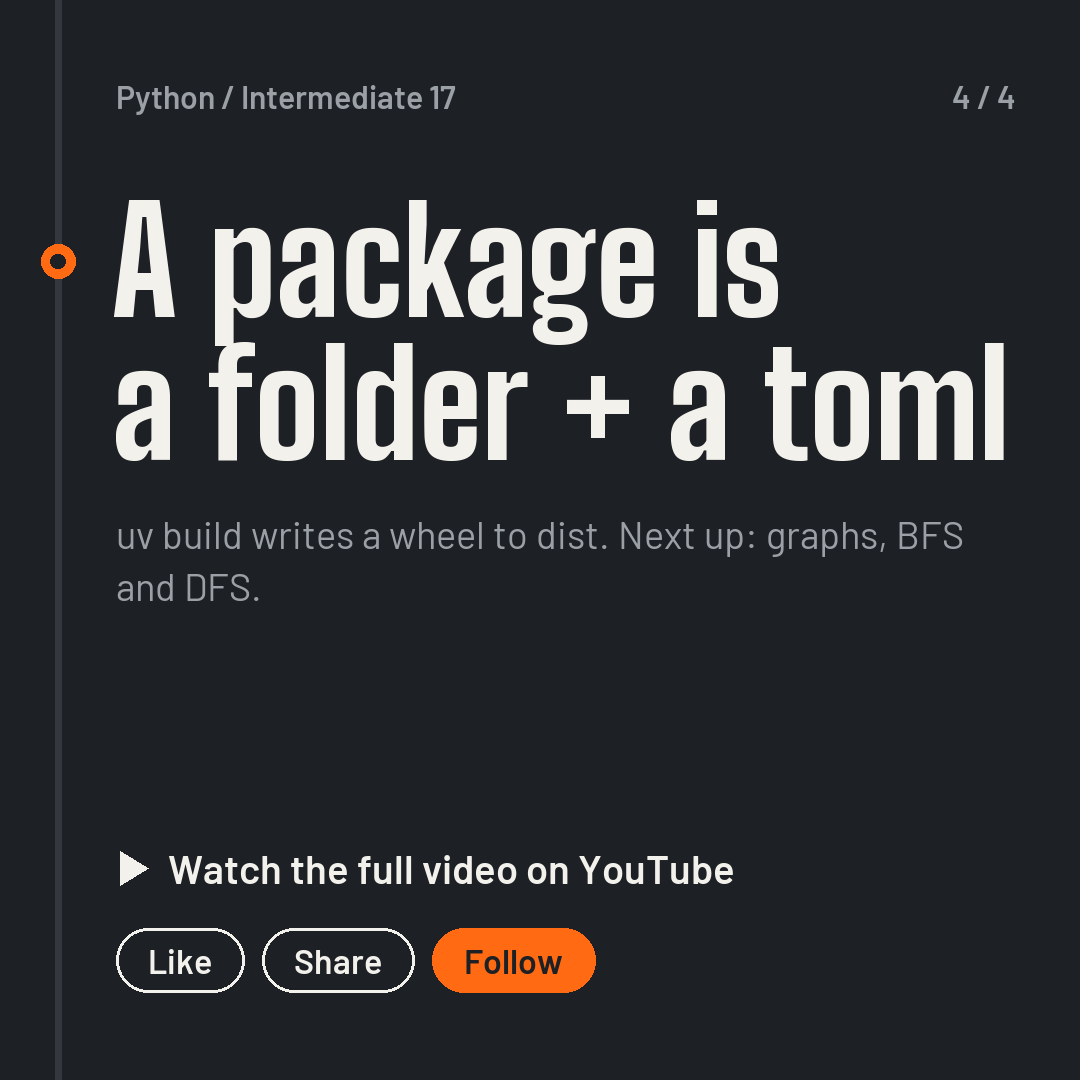
ALT Slide reading 'Package your Python code with uv'. The next slides show the four commands, the function greet calls with its output, and the takeaway 'A package is a folder + a toml'.



ALT Slide reading 'A test is just an assert'. The next slides show the test code, its failure output assert 5 == 6, and the naming rules, and end with: A test is an assert.


ALT Slide reading 'Fetch data from the web, no install'. The next slides show the urlopen code, its output delectus aut autem, and end with: urlopen + json.load.


ALT Slide reading 'Call a web API in Python'. The next slides show code that opens a URL and loads the JSON, a terminal printing 'delectus aut autem' and False, and the takeaway 'URL in, dictionary out'.


ALT Slide reading 'A tree that hands you sorted values'. The next slides show the inorder function, its output [1, 2, 3], and end with: Left, node, right = sorted.


ALT Slide reading 'Walk a tree left, node, right'. The next slides show a recursive inorder function, a terminal printing 1, 2, 3, 4, 6, and the takeaway 'Left, node, right = sorted order'.


ALT Slide reading 'Top 3 numbers without sorting it all'. The next slides show heapq.nlargest and nsmallest with their output, what to remember, and end with: Top k? Use heapq.


ALT Slide reading 'Python 3.15 has an immutable dict'. The next slides show a frozendict used as a dict key with its output, what to remember about hashing, and end with: Need a dict as a key? frozendict.


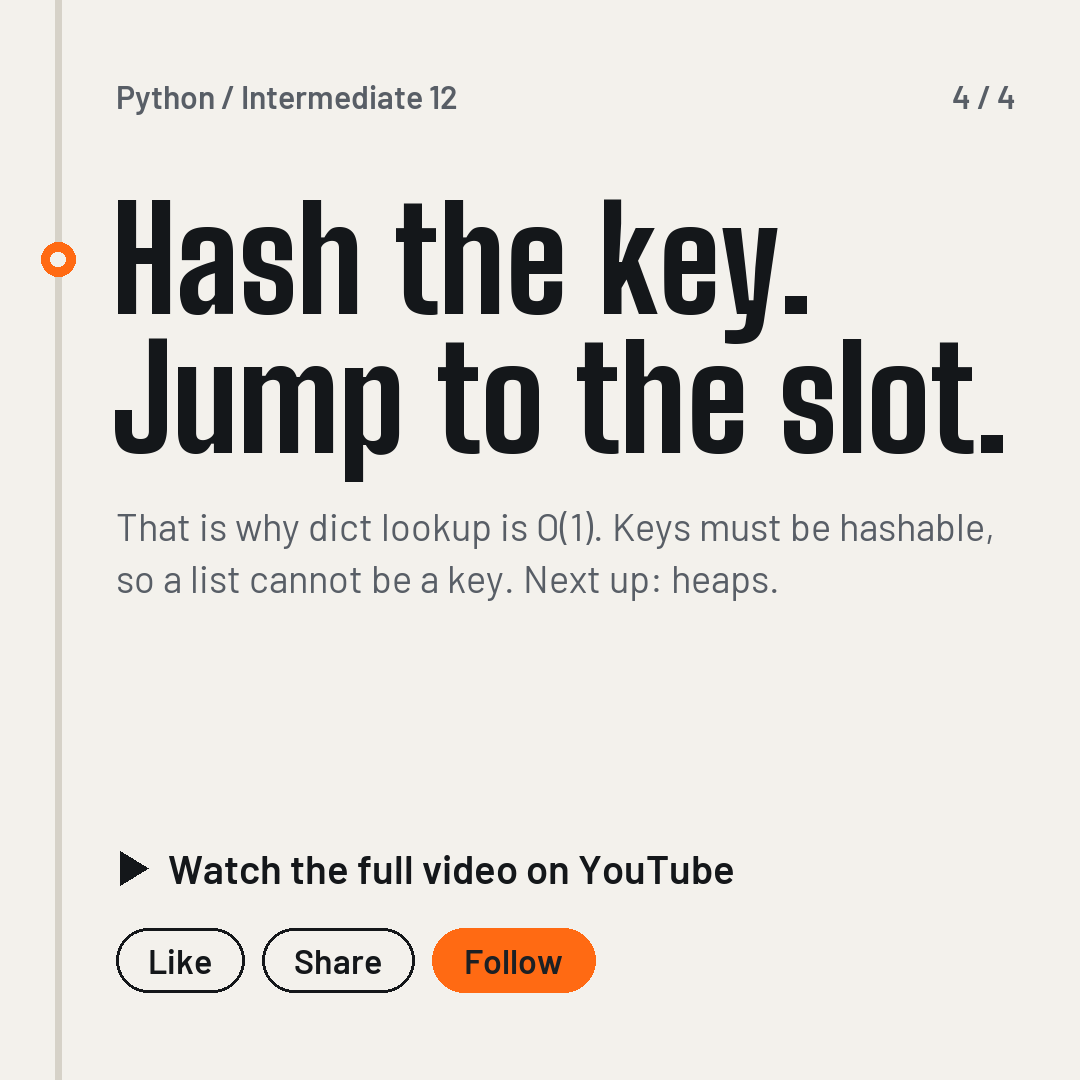
ALT Slide reading 'How a dict finds a key instantly'. The next slides show a small slot function, three words with their slot numbers where cat and act both get slot 0, and the takeaway 'Hash the key. Jump to the slot.



ALT Slide reading 'Sort words by length in one line'. The next slides show sorted with key equals len and its output, what key does, and end with: key= picks the order.


ALT Slide reading 'Binary search is built in to Python'. The next slides show insort and bisect_left with their output, what to remember about speed and sorting, and end with: Sorted list? Use bisect.


ALT Slide reading 'Binary search in Python in 3 minutes'. The next slides show a find function with its middle check, how low and high move past the middle, and the takeaway 'Sorted list. Halve. Repeat.'


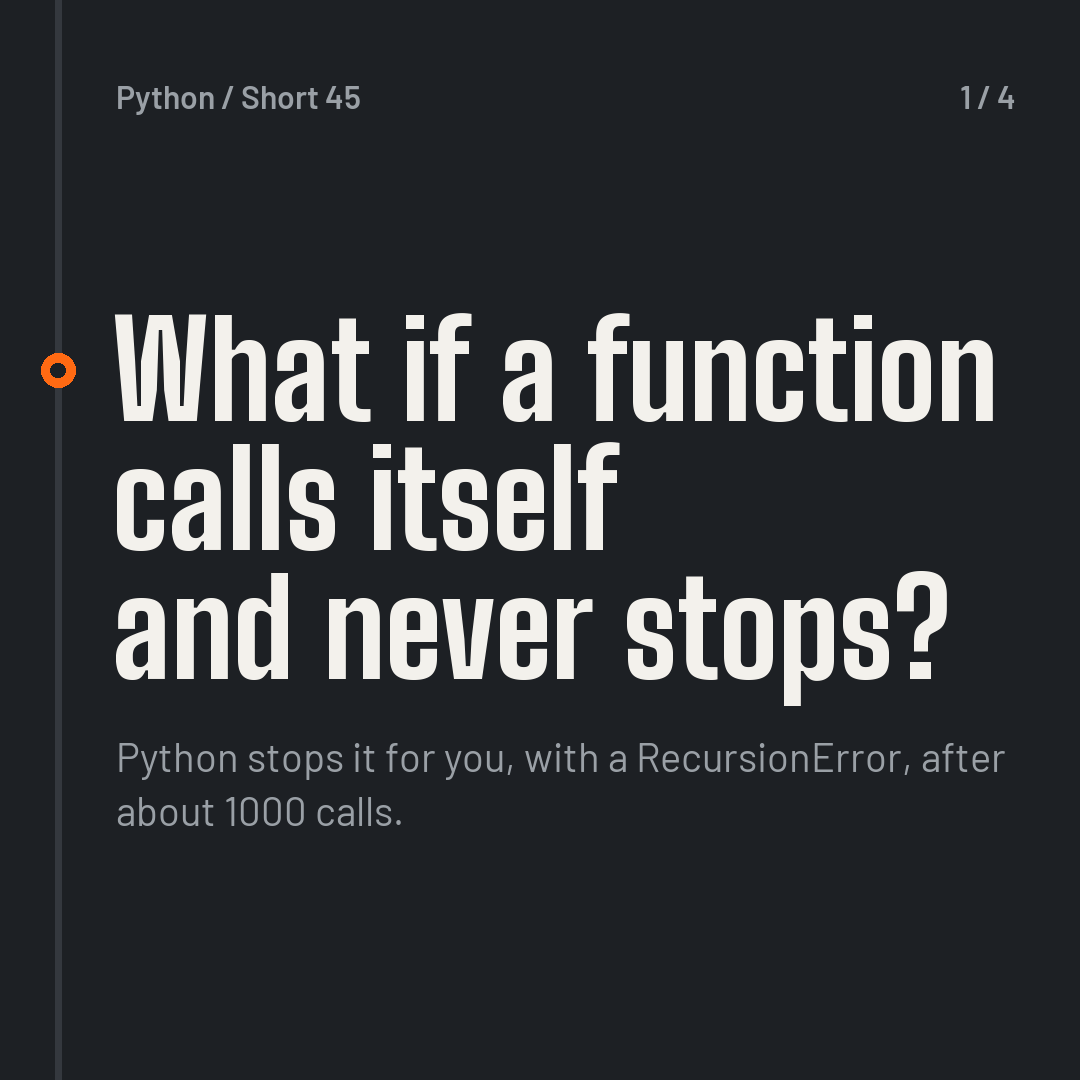
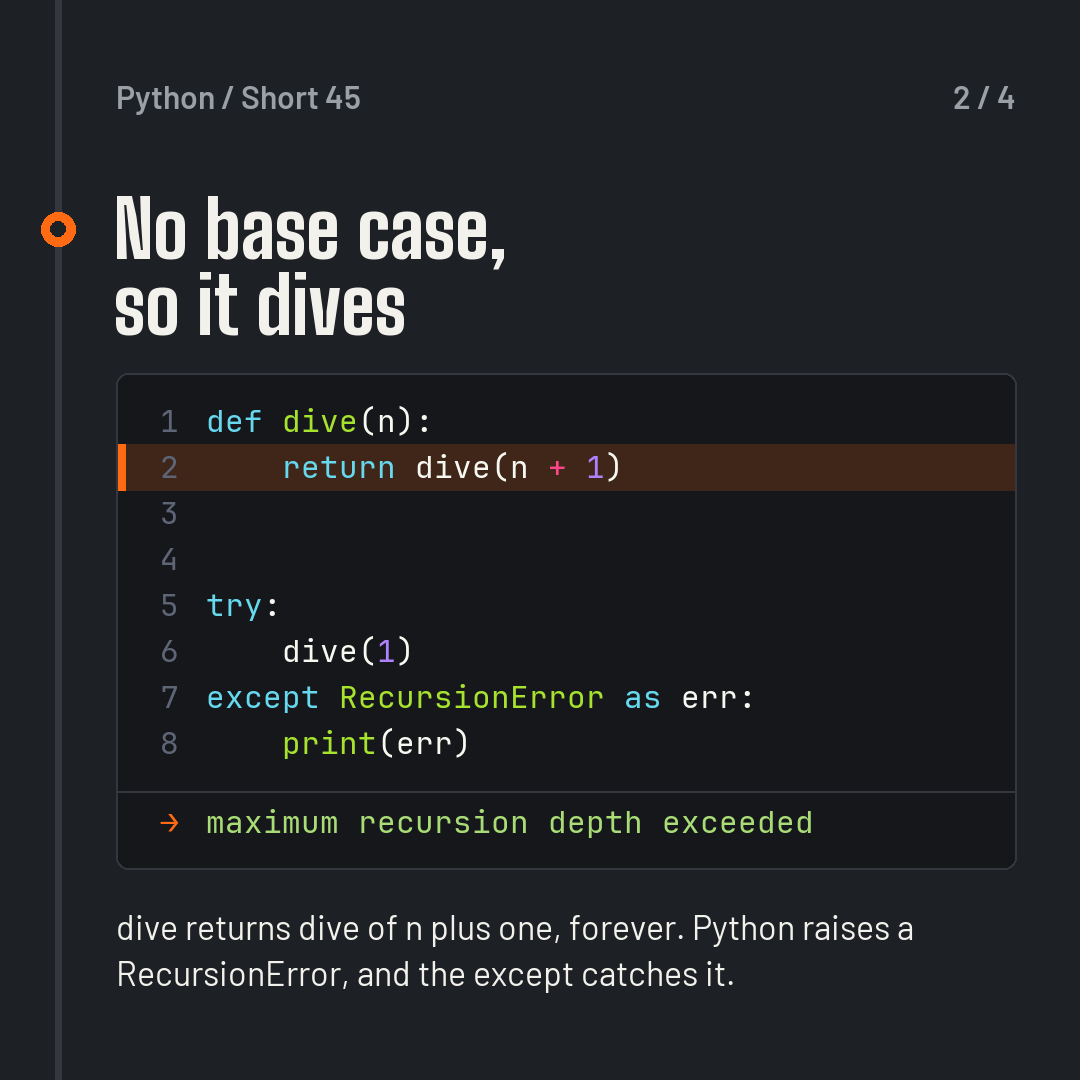
ALT Slide reading 'What if a function calls itself and never stops?' The next slides show the code with its RecursionError message, why Python stops it, and end with: no base case, no stopping.


ALT Slide reading 'Recursion in Python in 3 minutes'. The next slides show a factorial function with its base case, how calls pile up and unwind to give 24, and the takeaway 'Smaller problem. Base case. Done.'