

Web Developer👩🏻💻 | Technical Writer | JavaScript | React | Figma | Content Writer @softaims_ | DMs open
Remote
- Tweets 9,705
- Following 428
- Followers 13,905
- Likes 35,530


Pinned Tweet

The Box Model in CSS 🎨
✧ In HTML, all elements are considered as a box. A box comprises padding, border, and margin in addition to its actual content.
A thread 👇🏻

48
210
1,086
SEO CheatSheet 2026: 12 Key SEO Pillars
70+ topics.
One simple SEO map.
Save it for later. 🔖

4
10
902
AI SEO tip:
Put a clear 2–3 sentence answer right under each heading. Then expand below it.
That short, self-contained chunk is exactly what ChatGPT and AI Overviews lift into their answers.
1
5
565

This is so clean @alicalimli_dev👏
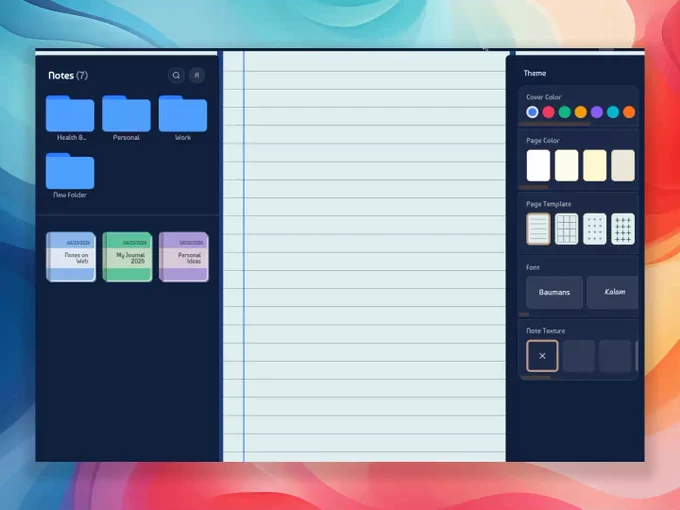
Those little notebook files on the left >>>


Okayy deployed it today, come try it free! 🔥
I built this primarily for my bullet journaling, but can be used to write anything.
It's completely local, whatever you write stays with you.
Live site: alicalimli.com/shiruya

2
523

Ishrat retweeted

Okayy deployed it today, come try it free! 🔥
I built this primarily for my bullet journaling, but can be used to write anything.
It's completely local, whatever you write stays with you.
Live site: alicalimli.com/shiruya
Finally polished up the notebook item UI.
Overll the app is stable now. I'll make a public build tomorrow! 🔥
9
2
24
2,374
This book will change how you think about work forever.
"It Doesn't Have to be Crazy at Work" by Jason Fried.
What it's actually about:
→ Why your "always-on" culture is killing productivity
→ How to build a calm company in a chaotic world
→ The real cost of constant interruptions and meetings
→ Why 40 hours of focused work beats 80 hours of chaos
Key insights:
- Long hours don't equal hard work
- Instant communication makes you LESS effective
- Most "urgent" work isn't actually urgent
- Protecting your team's attention is your job as a leader
This book basically tells the story of how Basecamp built a $100M company:
1/ 6-hour workdays in summer
2/ No chat during focus time
3/ Meetings are the last resort
4/ Calm is a competitive advantage
5/ and more
Jason shows you it's possible to succeed without losing your mind.
The ultimate guide to run a company.
Pretty refreshing.

2
2
7
528
Ishrat retweeted
The this keyword is one of those JavaScript concepts that looks simple but often causes confusion.
At its core, this refers to the context in which a function is called.
The important part is:
this is determined by how a function is called, not where it is defined.
Here are the common cases:
1. Inside an object method
const user = {
name: "Ishrat",
greet() {
console.log(this.name);
}
};
user.greet(); // Ishrat
Here, this refers to the user object.
2. Inside a regular function
In non-strict mode, this can refer to the global object.
In strict mode:
"use strict";
function greet() {
console.log(this);
}
greet(); // undefined
3. Inside an event handler
button.addEventListener("click", function () {
console.log(this);
});
Here, this refers to the element that triggered the event.
4. Arrow functions are different
Arrow functions don't have their own this.
They inherit this from their surrounding scope.
const user = {
name: "Ishrat",
greet: () => {
console.log(this.name);
}
};
user.greet(); // undefined
This is one reason you should be careful when using arrow functions as object methods.
The key takeaway
Don't memorize "this always means the current object."
Instead, ask:
"How was this function called?"
That usually tells you what this refers to.
Understanding this makes objects, event handlers, classes, callbacks, and frameworks like React much easier to reason about.

1
4
5
532


Found this SEO tip on Reddit:
"Rule of thumb: 1 internal link per 50 words. 1 external link per 150 words."
What do you think?
Is this actually a useful rule of thumb or just another SEO myth?
2
7
565
JavaScript DOM APIs let you control HTML with JavaScript.
You can:
→ Find elements
→ Change content
→ Change attributes
→ Modify styles
→ Create elements
→ Remove elements
→ Handle events
Here are the DOM APIs every JavaScript developer should know 🧵

6
1
11
665
One important thing to remember:
DOM is not JavaScript.
JavaScript is the language.
The DOM is a Web API provided by the browser.
JavaScript uses DOM APIs to interact with web pages.
Learn these APIs well and manipulating the browser becomes much easier.
1
3
68
Want to see these DOM APIs working together?
I built a small Todo app using vanilla JavaScript.
You can add tasks, mark them complete, and delete them while seeing the DOM change in real time.
Try it → 🔗 codepen.io/editor/ishratumar…
3
71