

Chief Meme Officer at corrode. corrode.dev codeprints.dev analysis-tools.dev openpodcast.app http://lychee.cli
Düsseldorf
- Tweets 3,159
- Following 552
- Followers 3,353
- Likes 3,016







Pinned Tweet

New episode of Rust in Production with Jon Gjengset (@jonhoo) from Helsing.
We talked about using Rust where bugs have real consequences, type system trade-offs, CRDTs on the edge, and more!
Here's the link to the episode:
corrode.dev/podcast/s06e02-h…
#rustlang
1
6
354
Matthias retweeted

It can be quite elegant though - people have to lean into the type system more, understand that type inference is top class. That and pivot to expression based thought process :)
I read a great blog post a few days ago on this @matthiasendler : corrode.dev/blog/ugly/
3
24
5,487
In the newest episode of Rust in Production, I talk to Alexey Milovidov and Austin Bonander from the ClickHouse team about what it's like to introduce Rust into a C++ codebase. Enjoy!
corrode.dev/podcast/s06e06-c…
#rust #rustlang
1
1
16
714
New Rust in Production episode: Veo.
Where carefully written code meets sensors, lenses, and real-time constraints:
AI sports cameras that follow the match on their own, and the Rust behind them from camera firmware to backend.
corrode.dev/podcast/s06e05-v…
#rustlang #rust
1
16
1,004
New Rust in Production, live from @RustWeek 🦀🐧
On stage with two legends shaping the Linux kernel:
🐧 Greg Kroah-Hartman, Linux Foundation Fellow
⚙️ Alice Ryhl, Tokio maintainer & Rust for Linux at Google
▶️ corrode.dev/podcast/s06e04-r…
Enjoy!
#rustlang #rust
1
3
266
New episode of Rust in Production!
NLnet Labs builds the DNS and routing infrastructure the internet runs on (NSD, Unbound, Routinator) -- and they're doing it in Rust.
Talked to Arya and Martin about how they got there.
corrode.dev/podcast/s06e03-n…
#rustlang #rust
3
225
Season 6 of Rust in Production is finally here!
First episode: how @cloudsmith sped up their Django monolith with Rust extensions. No big rewrite needed. :)
corrode.dev/podcast/s06e01-c…
#rustlang #rust #podcast
1
8
419
Matthias retweeted

Just finished all 41 episodes of Rust in Production by @matthiasendler and wow, I’m hooked. This has been my everyday coffee ritual. Finally caught up and already waiting for the next episode ☕️🦀
1
2
259
Matthias retweeted
Rust crates I refuse to build backend systems without in 2026:
🔶 axum = ergonomic, modular HTTP framework
🔶 tokio = async runtime that powers half the Rust ecosystem
🔶 serde + serde_json = serialization that just works
🔶 validator = making request validation simple and predictable
🔶 sqlx = async, compile-time checked SQL without ORM magic
🔶 redis-rs = caching, queueing, rate limiting
🔶 tonic + Prost = gRPC with first-class async support
🔶 tracing + tracing-subscriber + log = structured logs you can actually use easily
🔶 thiserror / anyhow = error handling that stays out of your way
🔶 utoipa = OpenAPI docs without boilerplate
🔶 prometheus = metrics you can alert on
🔶 time / chrono = date & time utilities
🔶 jsonwebtoken = straightforward JWT auth for secure endpoints
🔶 argon2 = secure password hashing
Which 3 Rust crates are non-negotiable for you?

Golang libraries I refuse to build backend systems without in 2026:
🔶 chi (or gin) = HTTP routing that stays out of your way
🔶 zap (or slog) = structured logging that won’t slow prod
🔶 validator/v10 = request validation that isn’t “if err != nil” spaghetti
🔶 sqlc = type-safe SQL without ORM magic
🔶 pgx = Postgres driver that actually performs
🔶 redis/go-redis = caching + rate limits + locks
🔶 grpc-go = service-to-service calls done right
🔶 protobuf = contracts that don’t break silently
🔶 go-playground/middleware patterns = timeouts, recover, request IDs
🔶 prometheus/client_golang = metrics you can alert on
🔶 OpenTelemetry (otel) = tracing when “it’s slow sometimes” happens
🔶 testify = tests that don’t make you cry
🔶 mockery = sane mocking for interfaces
🔶 uber-go/fx (optional) = DI when the codebase gets big
🔶 golangci-lint = one command to keep code quality honest
Which 3 Go libs are non-negotiable for you?
1
5
839
Rust in space 🚀
Gama builds satellites in Rust.
I talk with Sebastian Scholz in the final episode of Season 5 of Rust in Production.
Topics: defensive programming, design patterns, testing, and more!
Link: corrode.dev/podcast/s05e09-g…
#rust #space
3
18
113
4,372
Radar replaced their Elasticsearch/MongoDB-based geospatial search backend with a single Rust binary.
Here's their story: corrode.dev/podcast/s05e08-r…
Thanks to @j_ckao for the interview!
#rustlang #rust #rustinproduction
1
11
61
2,493
A heartfelt thank you to our guests and listeners! 🎄
Our 2025 holiday special is out now, in which we reflect on two years of Rust in Production.
corrode.dev/podcast/s05e07-h…
Happy holidays! 🎁
#rustlang #rust
17
134
4,666
How can Rust solve problems that C can't in the Linux kernel?
I talked to Danilo Krummrich about rewriting NVIDIA's driver in Rust and the Rust4Linux project.
Turns out, when your code compiles, it actually works.
corrode.dev/podcast/s05e06-r…
#rustlang #rust
6
47
305
18,778
Jon Seager, VP of Engineering at Canonical and I discussed using Rust in Ubuntu! 🦀🎙️
We covered the tradeoffs of migrating to Rust (including uutils and sudo-rs), future projects, and the costs of legacy C software.
corrode.dev/podcast/s05e05-c…
#rust #rustlang
1
16
94
7,429
Just released my interview with @rtfeldman about rewriting Roc from Rust to Zig.
We talked about compile times (20s vs 1.3s), when the borrow checker is overkill, and why comptime can't just be bolted onto Rust.
corrode.dev/podcast/s05e04-r…
#rustlang #rust #zig #podcast
4
16
145
13,505
Matthias retweeted

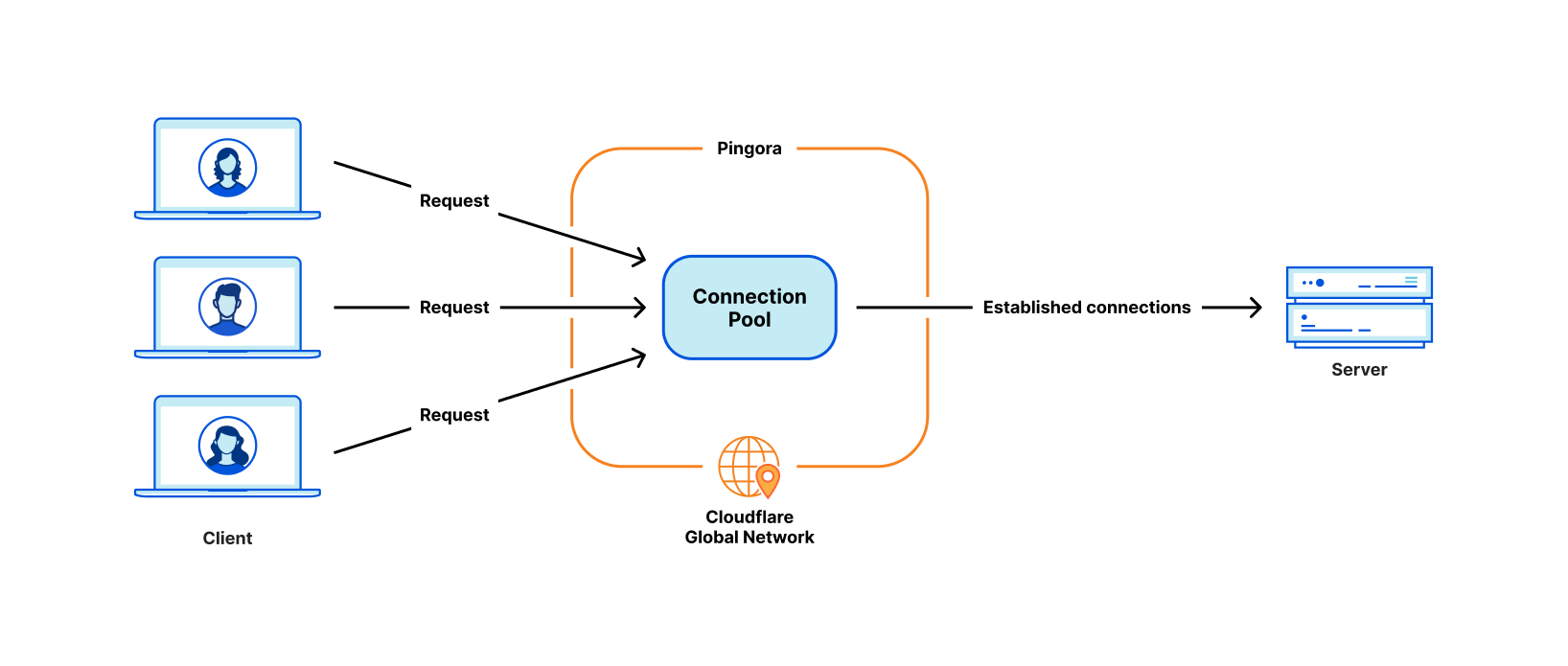
☁️ How Cloudflare handles 90 million requests per second with Pingora
- Rust in Production Podcast with Edward Wang & Kevin Guthrie, Software Engineers (CloudFlare)
corrode.dev/podcast/s05e03-c…
1
11
113
14,890
Cloudflare's Pingora proxy handles 90 million requests... PER SECOND!
I asked Edward and Kevin from the team for an interview.
We talked about Tokio, the wider async ecosystem, Rust developer ergonomics, and why Cloudflare chose Rust.
corrode.dev/podcast/s05e03-c…
#rustlang #rust
5
35
10,235
Autonomous Lawn-Mowing Robots using Rust! 🌱 🦀
In today's podcast episode, I spoke with @andrewtinka from @ScytheRobotics about how they're breaking ground with cutting-edge hardware and software, and how Rust makes industrial robots work.
corrode.dev/podcast/s05e02-s…
#rust
3
238
Looking for a nice weekend project? Maybe write a HTTP server from scratch?
It's a fun way to improve your coding skills. Here's my attempt in Rust.
piped.video/aZ5sfhGmEVU?si=zViU…
#rustlang #rust
2
2
16
1,245